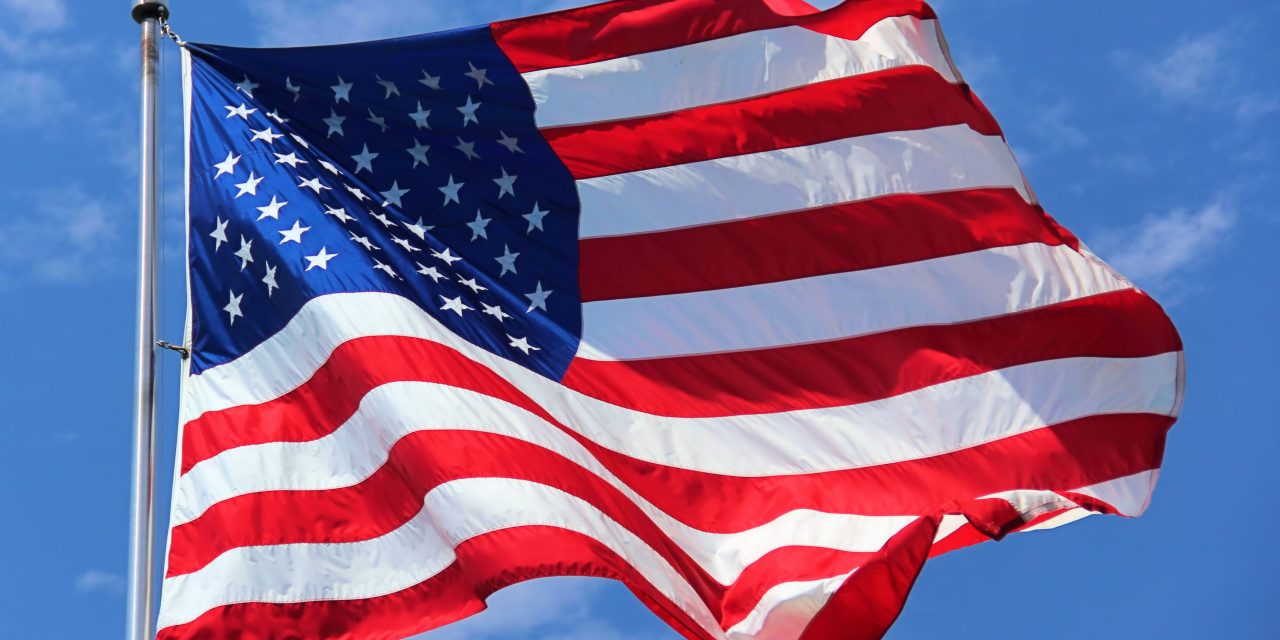
As America celebrates its 233rd birthday, we are reminded of the many contributions immigrants have made to America throughout our great history. Nowhere will this be more celebrated than in the 50 naturalization ceremonies taking place around the nation this weekend where 6,000 immigrants will become Americans at venues like Disneyworld and George Washington’s Mount Vernon. Five hundred of those about to pledge their allegiance to America are already defending our nation on a daily basis as members of the armed services. They will take part in naturalization ceremonies in Baghdad, Norfolk, Camp Lejeune, and Nellis Air Force Base.
As USA Today‘s editorial board reminds us this Independence Day:
New Americans symbolize what’s right with America; a nation of immigrants that was built by opening its doors…America remains the envy of much of the world and a magnet for millions who come seeking opportunity they can’t find elsewhere.
America is now—and has always been—a nation of immigrants. What better time, then, to turn our attention this Independence Day to the demographic diversity that has long been a principal strength of the U.S. economy and civil society? Immigrants, Latinos, and Asians play critical economic roles as workers, entrepreneurs, and consumers. As a result, they will be crucial players in the nation’s efforts to recover from the current recession and the success of America’s economic future.
According to a new Immigration Policy Center (IPC) fact sheet on immigrant contributions to the US economy and society:
- Immigrants, Latinos, and Asians make up a large and growing share of the U.S. population—growing from 7.9% in 1990 to 12.6% in 2007, according to the U.S. Census Bureau.
- Immigrants are an integral part of the U.S. labor force comprising 15.6% of the U.S. civilian labor force age 16 and over in 2008, according to the Bureau of Labor Statistics.
- Immigrants increase the nation’s economic output each year by roughly $37 billion, according to a 2007 report from the White House Council of Economic Advisers.
- Most native-born workers, roughly 90%, have experienced wage gains from immigration ranging from 0.7% to 3.4% depending on their level of education, according to a 2006 study by Giovanni Peri, Associate Professor of Economics at the University of California-Davis
So this Fourth of July weekend, as we celebrate America’s heritage with our friends and family, we should also remember America as our founding fathers intended—as a bastion of freedom and opportunity for all those who seek it.
As New York Times columnist, Thomas Friedman, writes:
Dear America, please remember how you got to be the wealthiest country in history. It wasn’t through protectionism, or state-owned banks or fearing free trade. No, the formula was very simple: build this really flexible, really open economy, tolerate creative destruction so dead capital is quickly redeployed to better ideas and companies, pour into it the most diverse, smart and energetic immigrants from every corner of the world and then stir and repeat, stir and repeat, stir and repeat, stir and repeat.
FILED UNDER: undocumented immigration, Video